
Updated for September 2026
The Best Zoos in South America
How this list is ordered: by how complete our listing is — how much we hold on opening hours, ticket prices, accreditation, photographs, animals and facilities. It is a measure of our own coverage, not a judgement of the venue. We hold no visitor scores or conservation assessments, so “best” here means every zoo in South America that qualifies for the list, fullest entry first.
Listed alphabetically
-
Education programDisability admission concession
Bioparque UKUMARI
Zoo in Pereira
Bioparque UKUMARI is a zoo in Colombia. Animals on show include Hipopótamo, jirafa, cebra, rinoceronte blanco and elefante africano.
-
Disability admission concession
Fundación Temaikèn
Zoo in Belén de Escobar
It is owned by a non-profit foundation started by Pérez Companc and is run as a biopark, merging the aims of a botanical garden, a zoo, an aquarium and a museum of natural history and anthropology.
-
ParkingAssistance animal policy
Parque de la Conservación
Zoo in Medellín
Parque de la Conservación, opened in 2020, is a zoo in Colombia.
-
Petting zooChild friendlyParking
Parque de las Leyendas
Zoo in San Miguel
It is the country's biggest and best-attended zoo, and also holds museums, a botanical garden and leisure areas. The metropolitan municipality of Lima administers it.
-
On-site diningDisability admission concessionSensory and cognitive support
Parque Zoológico Buin Zoo
Zoo in Buin
The built area covers 18 hectares, and the zoo belongs to ALPZA, the Latin American zoo and aquarium association.
-
Child friendlyEducation programOn-site dining
Zoológico de Cali
Zoo in Cali
Roughly 2,500 animals of 233 species are kept. The grounds lie inside the municipal woodland beside the río Cali. Teaching, recreation and research schemes there are aimed at Colombian biodiversity.
-
Bauru Zoo
Zoo in Bauru
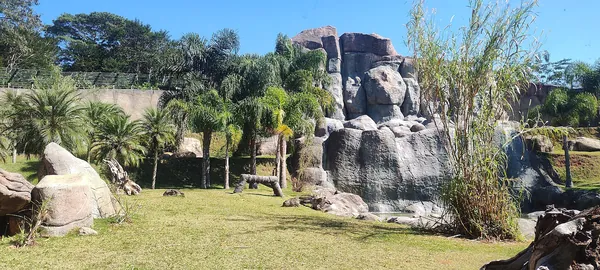
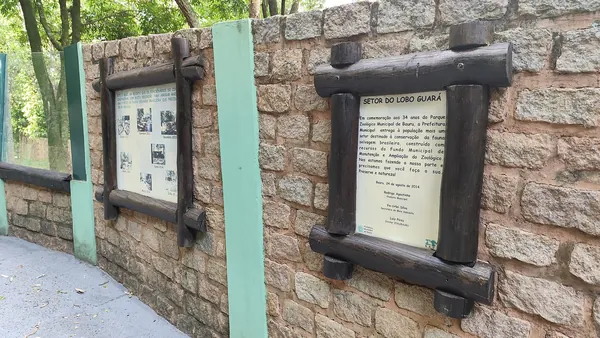
It opened on 24 August 1980 across 50,000 square metres, on the highway named for Comandante João Ribeiro de Barros. It has a national reputation for breeding species regarded as extinct and was the first in Brazil to achieve penguin reproduction, in 2013. It is one of 20 zoos worldwide featured on Google Street View.
-
Fundación Zoológico de Barranquilla
Zoo in Barranquilla
The Fundación Botánica y Zoológica de Barranquilla runs the zoo on a site of 16,000 m2, adjoining the El Prado district and facing the municipal stadium.
-
Municipal Zoological Park Quinzinho de Barros
Zoo in Sorocaba
The zoo occupies around 130,000 square metres in the Vila Hortência district on the city's east side. The grounds take in a strip of secondary transitional Atlantic forest, a lake and the Sorocaba history museum. A 1992 survey by the Brazilian zoo society counted 1,487 mammals, birds and reptiles of 353 species, seventy per cent of them Brazilian fauna, including 36 threatened species.
-
Guided tour
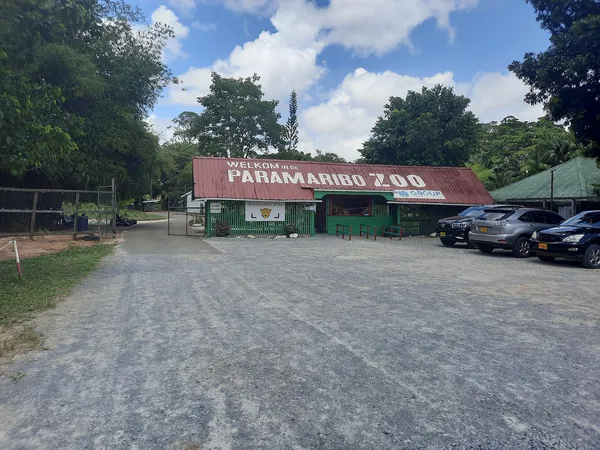
Paramaribo Zoo
Zoo in Paramaribo
Around three quarters of the animals are local wildlife, taken in as seized or surrendered pets. Its exhibits include Waterpark Werehpai and Terrarium.
-
São Paulo Zoo
Zoo in São Paulo
The grounds take in 824,529 square metres of original Atlantic Forest, crossed by four kilometres of walkways, and contain the headwaters of the historic Ipiranga stream in the city's southern zone. The zoo was inaugurated in 1958 with slightly more than 400 animals.
-
Bioparque do Rio
Zoo in Rio de Janeiro
Bioparque do Rio, opened in 1940, is a zoo in Brazil. Animals on show include axolote, serpentes, jacarés and quelônios.
-
Guyana Zoo
Zoo in Georgetown
Proposals for a zoo were aired as early as 1880, but nothing opened until 1952, on ground that had served as botanical gardens since 1895. The Victoria Regia Lily, the national flower, grows in those gardens among palms and other tropical planting. Harpy eagles and manatees draw the most attention, and around 25 people were employed in 2005.
-
On-site diningParkingMobility equipment loan
Parque das Aves
Zoo in Foz do Iguaçu
It lies close to the Iguaçu falls on 16 hectares of native forest and holds 1,500 animals of 140 species, taking in birds, reptiles and mammals. A private body, it works as an integrated conservation centre for Atlantic Forest species, researching captive breeding and keeping threatened animals. There are 1,300 metres of trails, with habitat mock-ups for caimans, boas, marmosets and butterflies.
-
On-site diningParkingSensory and cognitive support
Parque Explora
Zoo
Parque Explora is a zoo in Colombia. Its exhibits include Acuario and Vivario.
-
Valencia's Aquarium
Zoo & Aquarium in Valencia
The aquarium occupies the city's first waterworks building, known as the old water box, built in 1886 under Antonio Guzmán Blanco. It now keeps numerous fish and snake species as well as endemic plants.
-
Zoobotanic Park of Brusque
Zoo in Brusque
Zoobotanic Park of Brusque, opened in 1992, is a zoo in Brusque, Brazil.
-
Zoológico de Fauna Sudamericana
Zoo in Santa Cruz de la Sierra
The zoo counts among the city's tourist draws, largely for the range of native species it keeps. As of 2018 the collection stood at 232 species and 1,800 individual animals.
-
Zoológico de Goiânia
Zoo in Goiânia
Covering about 200,000 m2, it ranks among the city's main green spaces and draws more than 400,000 visitors a year. Over 450 birds, mammals and reptiles of 122 species are kept, both Brazilian and foreign. Wildlife care and environmental education are combined with leisure and cultural use.
-
Zoológico Nacional, Parque Metropolitano de Santiago
Zoo in Providencia
Zoológico Nacional, Parque Metropolitano de Santiago, opened in 1925, is a zoo in Chile.
-
Keeper talk or show
Eco Park Foz
Zoo
Eco Park Foz is a zoo in Brazil. Its exhibits include Bosque de primates and Pequeña granja.
-
Parque Zoológico Caricuao
Zoo in Caracas
It spans 630 hectares, of which 594 are set aside for wildlife, plants and the watershed.
-
Zoo Safari
Zoo in São Paulo
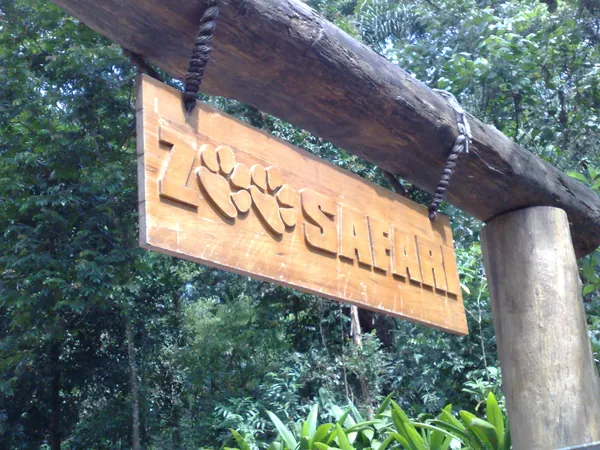
It was founded in 1971 by Francisco Luiz Galvão to imitate a safari for tourists, and held only lions at first; Simba is Swahili for lion. Visitors tour aboard the park's own vehicles, on a route of about 2.9 km through roughly 80,000 m2.
-
Zoológico de Sáenz Peña
Zoo in Presidencia Roque Sáenz Peña
The perimeter encloses 25 hectares given over to family recreation, and the site houses a recovery centre for native animals taken from traffickers and circuses or affected by accidents and natural disasters. It is described as the Argentine site most visited by scientists interested in breeding and recovering vanishing species. Drawing on expertise in Chaco flora and fauna, it runs planned releases into damaged habitats, reserves and national parks.
-
Córdoba Zoo
Zoo in Córdoba
Opened on 25 December 1915, it was the subject of a city council vote on 18 September 2020 to turn it into a biodiversity park. A 2021 provincial environment resolution, number 103, designated it a wildlife rescue centre, taking in animals recovered from illegal trafficking and the pet trade. It reopened in 2023 under a policy against putting animals on show.
-
Parque Lecocq
Zoo in Municipality A
The park covers 120 hectares next to the protected Santa Lucía wetlands. It belongs to the Montevideo city government and forms part of its protected parks unit. It lies about 19.5 km from the city centre, in a rural rather than urban part of the department.
-
Zoological Garden of Belo Horizonte
Zoo in Belo Horizonte
Administered by the Fundação Zoo-Botânica de Belo Horizonte, it has been open since January 1959. Over a thousand animals are held, arriving through exchanges with other institutions, donations supervised by IBAMA and births on site. The city government meets 80 per cent of running costs, the remainder coming from ticket sales and the sale of plant seedlings.
-
Zoológico Municipal de Guarulhos
Zoo in Guarulhos
Wild free-ranging animals also live inside the grounds, whose lakes and gardens have been replanted with Atlantic Forest species. An enclosure for the endangered buffy-tufted marmoset opened in 2019.
-
La Serena Zoo
Zoo in La Serena
Founded in 2006 by Erwin Vernal, the zoo holds 150 species. The site also has a picnic ground, a barbecue shelter with grills, and swimming pools.
-
Parque Ecológico de São Carlos
Zoo in São Carlos
Named in tribute to the veterinarian Antônio Teixeira Vianna, the park belongs to the municipality and sits beside the federal university. Entry is free, and it opens from Tuesday to Sunday, 8am to 4.30pm.
-
Parque Zoobotânico de Teresina
Zoo in Teresina
Facilities include an inflatable play area, a picnic ground, running space and nature trails. The vegetation is mainly semi-deciduous seasonal forest with riparian woodland along the rio Poti, and the plants are typical of the Amazon-cerrado-caatinga transition zone. Babaçu, macaúba, tucum and pati are the common palms.
-
Parque Zoológico Chorros de Milla
Zoo in Libertador
Built in 1952, it sits at the city's northeastern edge and shows species native to the Andean region and Venezuela. The grounds run to 10 hectares, are crossed by the Milla river and average 18 °C. It opens Tuesday to Sunday from 9:00.
-
Zoológico de Concepción
Zoo in Concepción
The collection numbers 340 animals across upwards of 51 species, on a heavily planted site carrying many kinds of trees.
-
Zoológico de Quilpué
Zoo in Quilpué
Beyond displaying animals, the zoo works on teaching and preservation, and it takes in animals confiscated or rescued by SAG, Chile's agriculture and livestock service.
-
Mendoza Zoological Park
Zoo in Mendoza
The zoo lies on the north-west slope of the Cerro de la Gloria within Parque General San Martín. It covers 48 hectares and holds about 1,100 animals.
-
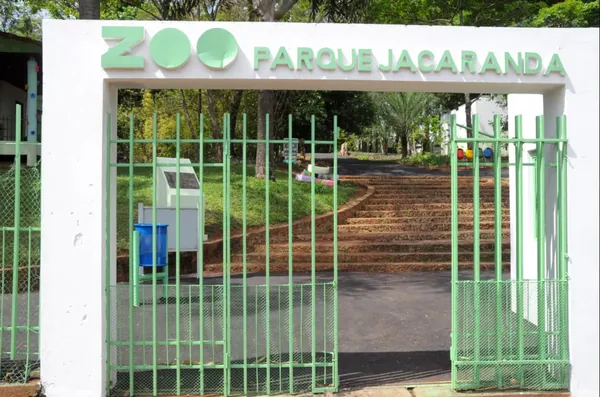
Parque Jacarandá
Zoo in Uberaba
Opened in 1966 as a municipal woodland, the 33,000 m2 site was reclassified as a zoo in November 1991 following upgrades and IBAMA accreditation. It has since been used for recreation, conservation and environmental education. The grounds are native woodland holding cerrado and Atlantic forest species along with springs.
Our ranking methodology
This is not a ranking. The 52 venues above are listed alphabetically by name, the same order used throughout this site. We do not collect visitor reviews, star ratings, ticket-sales figures or a conservation-impact score, so none of those exist here to rank by — “best” in this page’s title means every venue that qualifies for this list, not first-to-last by quality. If we ever add a data source robust enough to support an honest ranking, this note and the order above will change together.