
Updated for September 2026
The Best Zoos in Saxony
How this list is ordered: by how complete our listing is — how much we hold on opening hours, ticket prices, accreditation, photographs, animals and facilities. It is a measure of our own coverage, not a judgement of the venue. We hold no visitor scores or conservation assessments, so “best” here means every zoo in Saxony that qualifies for the list, fullest entry first.
Listed alphabetically
-
Child friendlyGuided tourOn-site dining
Zoo Dresden
Zoo in Dresden
The zoo houses 1,031 animals in 205 species, including 79 bird and 61 mammal species. It covers about 13 hectares in the south-western part of the Großer Garten.
-
ParkingDisability admission concession
Zoo Leipzig
Zoo in Leipzig
A rebuilding programme is running until 2028, the year of the zoo's 150th anniversary. In Anthony Sheridan's ranking of European zoos it is placed second, behind Tiergarten Schönbrunn.
-
Guided tourOn-site diningParking
Chemnitz Zoo
Zoo in Chemnitz
About 10 hectares of former marshland in the Reichenbrand district hold roughly 1,000 animals of some 200 species. Attendance in 2014, counting an associated game enclosure, was 178,233.
-
On-site dining
Naturschutz-Tierpark Görlitz
Zoo in Görlitz
Naturschutz-Tierpark Görlitz, opened in 1957, is a zoo in Görlitz, Germany. Animals on show include Steinböcken, Hirschen, Grauen Riesenkängurus, Trampeltiere and Rote Pandas.
-
Animal encounter
Tier- und Kulturpark Bischofswerda
Zoo in Bischofswerda
At roughly 0.75 hectares the park ranks among the smallest zoos in Germany. It holds about 200 animals of 60 species, brown bears among them, along with domestic breeds and native wildlife such as snowy owls and lynx. A giant sequoia planted in 1981 is a botanical feature.
-
Tiergarten Falkenstein
Zoo in Falkenstein/Vogtl.
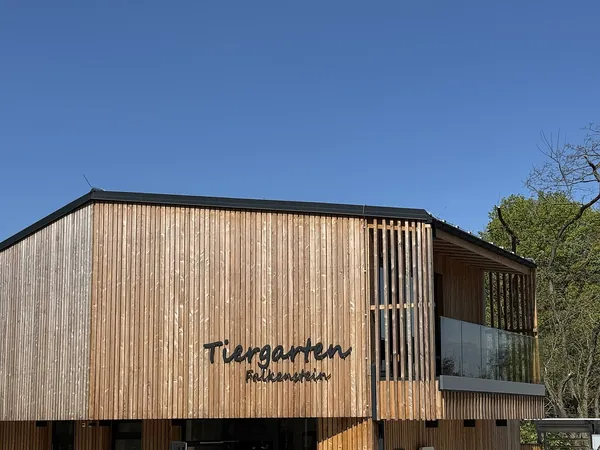
Tiergarten Falkenstein is a zoo in Falkenstein/Vogtl., Germany.
-
Parking
Tierpark Eilenburg
Zoo in Eilenburg
About four hectares are divided into three areas: a tropical house, a section for domestic and pet animals, and a wetland-and-woodland area.
-
Zoo der Minis
Zoo in Aue-Bad Schlema
The zoo specialises in keeping, breeding and showing unusually small breeds of animal, on the reasoning that small breeds need less space and feed while still drawing visitors. It is run by the biologist Bärbel Schroller, born in Aue in 1967.
-
Keeper talk or showChild friendlyBehind-the-scenes tour
Zoo Hoyerswerda
Zoo in Hoyerswerda
About 1,000 animals in 120 forms are kept on six hectares, together with 120 plants in 56 species, the tree stock including ginkgo, dawn redwood, hackberry and katsura. The grounds lie in the centre of the old town beside the castle and draw about 150,000 visitors a year.
-
Zoologischer Garten Leipzig
Zoo in Leipzig
Zoologischer Garten Leipzig is a zoo in Leipzig, Saxony, Germany.
-
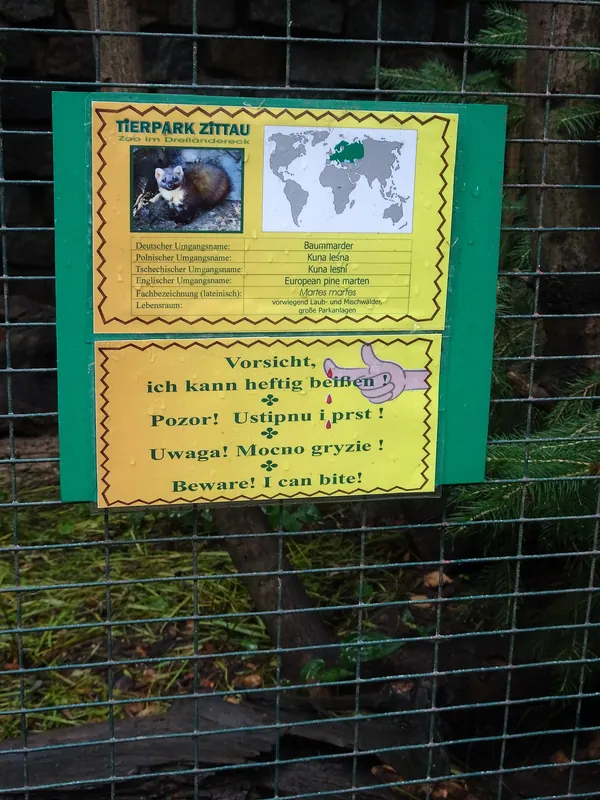
Tierpark Zittau
Zoo in Zittau
The park traces its origins to an early-century roe deer paddock and a woodland bird aviary, was founded in 1965 and has been fully enclosed since 1968. It stands in the Weinaupark, laid out in the English style from 1876 and largely intact. It also styles itself the zoo of the three-country corner.
-
Tiergarten Delitzsch
Zoo in Delitzsch
Set in the Lober floodplain northwest of the town park, the site has existed since 1968. About four hectares hold roughly 600 animals of 120 species. Low barriers of stumps, roots and boulders are all that separate visitors from the naturalistic enclosures.
-
Tierpark Weißwasser
Zoo in Weißwasser/O.L.
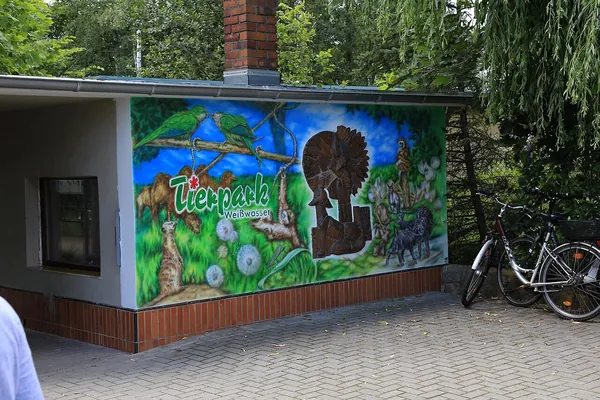
Set up in 1966 on the initiative of residents, local firms and institutions, the park covers 6.5 hectares and holds over 75 species and breeds from Europe, Asia, Africa and South America. It takes part in the European breeding programme and keeps a pair of Bali starlings, which have not yet produced young.
-
Wildpark Leipzig
Zoo in Leipzig
The park lies in the Leipzig floodplain forest and measures 42 hectares. Admission is free, and about 25 species and 250 animals of central European origin are shown. Red, fallow and mouflon deer share one large enclosure, and there are spacious pens for roe deer, wild boar, elk and wisent.
Our ranking methodology
This is not a ranking. The 14 venues above are listed alphabetically by name, the same order used throughout this site. We do not collect visitor reviews, star ratings, ticket-sales figures or a conservation-impact score, so none of those exist here to rank by — “best” in this page’s title means every venue that qualifies for this list, not first-to-last by quality. If we ever add a data source robust enough to support an honest ranking, this note and the order above will change together.