
Trip Planning
Is There a Zoo in North Korea? What Tourists Can See
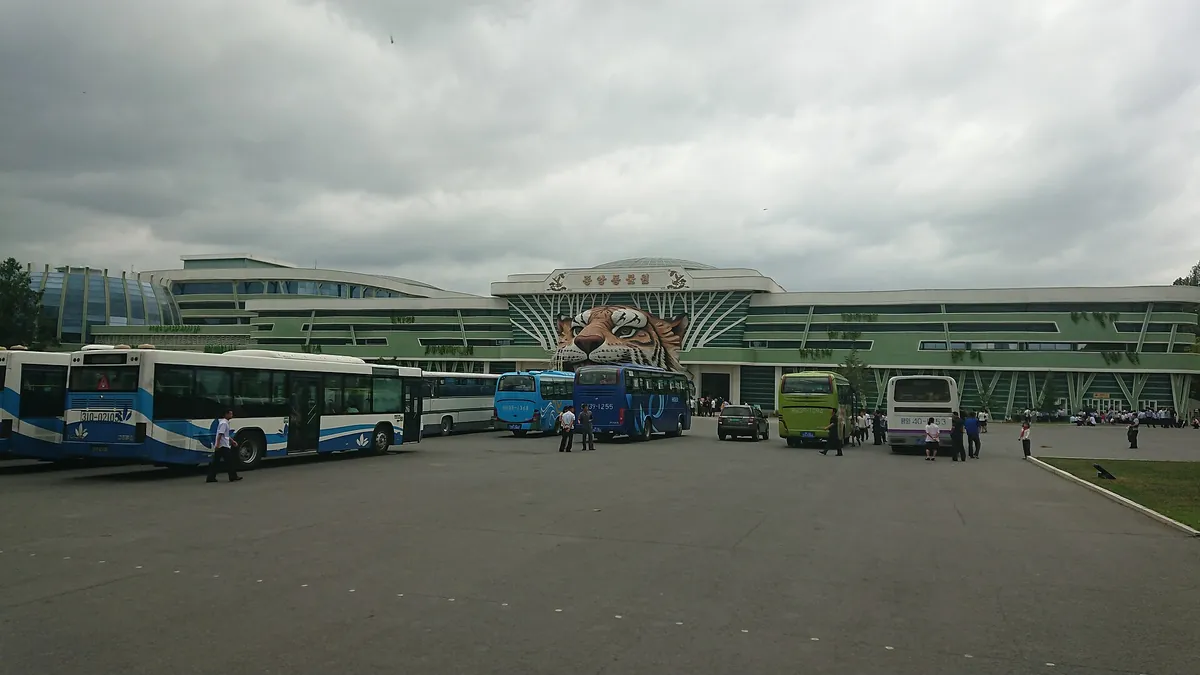
Yes -- North Korea has one zoo the directory lists, Korea Central Zoo in Pyongyang, which houses more than 5,000 animals across roughly 650 species. Whether you can see it yourself is the harder question: North Korea allows no independent travel, and as of September 2026 the country has barred Western and Chinese visitors from an autumn trade fair in Pyongyang, even as Russian visitor numbers there have been falling too.
What not to miss
Featured location Korea Central Zoo North Korea Ground of about a square kilometre next to Mount Taesong holds more than 5,000 animals of 650 species. Kim Il Sung is said to have ordered its creation, dated to April 1959. Gift animals from foreign leaders and members of the public numbered some 400 by 2001, and every elephant there traces back to one presented by Ho Chi Minh in 1959.
Kim Il Sung ordered the zoo built in 1959, with just 50 badgers as its founding stock; it opened in April 1960. Vietnamese-born elephants, a gift from Ho Chi Minh, arrived among the earliest animals, and their descendants still live at the zoo today; a family of monkeys was reportedly the bigger draw at the time. Giant pandas came from Beijing Zoo in 1965 and again in 1971, though both pairs were gone by 1980.
Kim Jong Un had the zoo rebuilt starting in 2014, and it reopened in July 2016 with a natural history museum showing the origins of the solar system and the evolution of life, alongside more conventional exhibits of elephants, giraffes, penguins and monkeys. A separate Animal Museum, dating to 1985, displays mounted animals gifted by foreign visitors, including a large donation from the director of Sweden's Skansen Aquarium. The Dog Pavilion works almost as a diplomatic archive: a King Charles spaniel given to Kim Jong Il by a US company in 1995 shares the building with zebras and ostriches from Tanzania's president, orangutans from Indonesia's Suharto, and a jaguar from the mayor of Kyoto.
The collection keeps growing. In late 2024 Russia donated more than 70 animals, including a lion, two brown bears, two yaks, five cockatoos, pheasants and mandarin ducks. In January 2025 the zoo put up an English-language website -- a rare move for North Korea online -- showing off its history and facilities, though it publishes no prices or hours a visitor abroad can rely on.
Getting there -- and who can actually go
Inside Pyongyang, the zoo sits on the Hyoksin Line of the Pyongyang Metro, at Ragwon station. Getting to Pyongyang at all is the harder part. North Korea allows no free or independent tourism, for any nationality: every foreign visitor travels on a guided tour with government minders, from arrival to departure. US passport holders are barred outright, a State Department restriction in place since September 2017 and renewed through August 2026.
Even when the country has cracked its door open, Pyongyang itself has usually stayed shut to Westerners. In February 2025, the first Western tourists since the Covid-19 border closure -- from Britain, Canada, France and Germany -- were allowed into the Rason special economic zone in the northeast, but unlike Russian visitors they were not permitted into the capital. That reopening lasted weeks: by early March 2025, tour operators were telling clients Rason was closed again, with no reason given.
North Korea has barred Western and Chinese visitors from attending an upcoming trade fair in Pyongyang over epidemiological concerns, reversing a recent, limited reopening to foreign participants
Russian nationals are the exception that currently functions, though thinly. A basic Russian tour to Pyongyang, flying from Vladivostok with visa, hotel, meals and a guide included, runs around $1,244; an eight-day version adding the Wonsan-Kalma beach resort costs about $1,900. About 5,000 Russians visited in 2025 and roughly 6,000 are forecast for 2026, but demand is easing: only 1,632 of the 3,623 Russians who entered in the first half of 2026 counted as tourists at all, down from 1,935 a year earlier.
Other wildlife in North Korea
The zoo isn't the only reason to think about North Korean wildlife. The Siberian, or Amur, tiger's range is usually given as northeast China and the Russian Far East, "and possibly North Korea": an unknown number may survive in reserve areas around Baekdu Mountain, on the China-North Korea border, based on tracks and sightings rather than a confirmed count. The country has nine national parks.
Frequently asked questions
- Are there zoos in North Korea?
One: Korea Central Zoo in Pyongyang, the country's only zoo of national scale, with more than 5,000 animals across roughly 650 species.
- Is there wildlife in North Korea?
Likely, though poorly documented. The country has nine national parks, and reserve areas such as those around Baekdu Mountain are thought to still hold wild animals, but confirmed data is scarce because so much of the country is closed to independent researchers and travellers alike.
- Are there tigers in North Korea?
Possibly. The Siberian tiger's range is usually described as northeast China and the Russian Far East, "and possibly North Korea" -- an unknown number may survive near Baekdu Mountain, based on tracks and sightings rather than a confirmed population count.
- Are there animals in North Korea?
Yes, both wild and captive. Korea Central Zoo alone holds more than 5,000 animals, and Russia added more than 70 more in late 2024, including a lion and two brown bears.
- Can anyone go to Pyongyang?
It depends on nationality and timing. North Korea allows no independent travel for anyone, and as of September 2026 Western and Chinese visitors have been barred from an autumn trade fair in Pyongyang; Russian visitor numbers there have also been falling.
Discover more in North Korea
Plan your visit to North Korea
See the one zoo, aquarium or wildlife attraction we list in North Korea, with opening hours, ticket prices and accreditation.
Browse North KoreaMore guides
-
 Trip Planning
Is Osaka Aquarium Kaiyukan Worth It?
What you see at Osaka Aquarium Kaiyukan, the 2026 rule changes to know, and two other Osaka options if the answer is no. -
 Trip Planning
The Largest Zoo in India, by Area and by Animals
Tirupati's zoo is India's biggest by area, but not by animals. Compare the giants on size, collection, tickets and how much of a day each takes. -
 Trip Planning
Where to See Komodo Dragons in Indonesia, Wild and in Zoos
Komodo National Park or a zoo in Surabaya, Jakarta, Bogor or Bali? Compare the wild trip with the zoo options, what each costs and the 2026 rules.