
Family Travel
Baños, Ecuador with Kids: The EcoZoo and Beyond
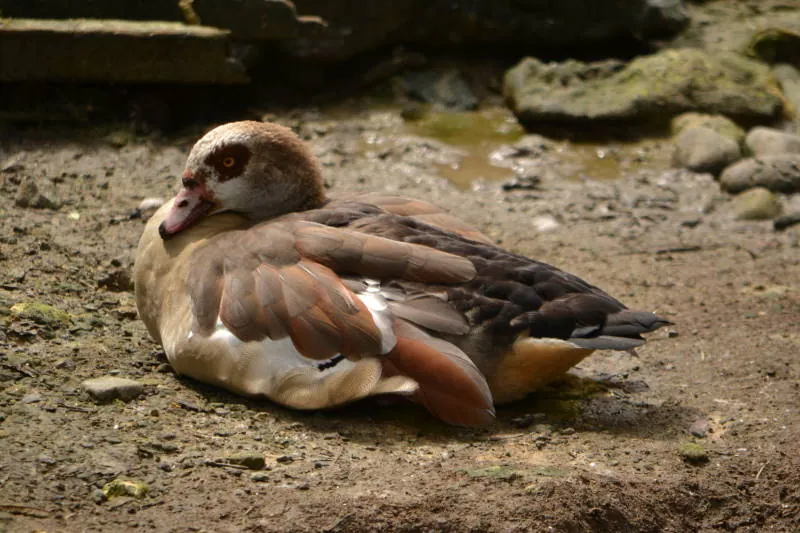
Yes, make room for the EcoZoo San Martín. It sits 2 km from the town of Baños, charges US$4 for adults and US$2 for children as of September 2026, and puts spectacled bears, jaguars, tapirs and the Andean condor in front of your children, mostly the wildlife of Ecuador itself. It is a gentle counterweight to the rafting and bridge jumping on offer in town, and it pairs well with a waterfall walk or a soak in the hot springs.
What not to miss
Featured location EcoZoo San Martín de Baños Ecuador ALPZA EcoZoo San Martín de Baños is a zoo in Ecuador.The zoo keeps 180 animals of 48 species, and most of what it shows is Ecuador's own fauna. Start with the big mammals: spectacled bears, pumas, tapirs, capybaras, and the jaguars and ocelots, which the zoo labels tigre americano and tigrillo. That is worth knowing before a child asks where the tigers are. The monkeys include capuchins, spider monkeys and woolly monkeys.
The bird section holds the Andean condor, the king vulture, the black-chested buzzard-eagle, blue-and-yellow macaws and the Andean toucan. In 2016 a guide at the zoo told El Telégrafo that the condor enclosure is one of the most visited areas in the zoo. If the Galápagos are not on your route, look out too for the Galápagos giant tortoises.
The zoo also takes in rescued wildlife. It has reported caring for Pinocho, a spectacled bear cub about two months old that had been rescued by Ecuador's Ministry of the Environment. Staff from the wildlife unit and Llanganates National Park reported on the cub every day, and it was kept away from people so that it would not lose its wild state. The zoo has also announced the birth of twin spider monkeys, and in 2026 it gained accreditation from ALPZA, the Latin American zoo and aquarium association, for 2026-2031.
The zoo's roots go back to a small zoo owned by the Dominican fathers, and its owner, Orlando Vega, told El Telégrafo in 2016 that it opened in 1992.
With kids and accessibility
The zoo is split into two sections. The bird section has 22 enclosures holding about 35 species and roughly 107 birds, plus a souvenir shop; the mammal and exotic section has 19 enclosures holding about 25 species and roughly 150 animals, plus a bar for visitors. Everything is spread across steep ground, so plan on carrying small children rather than pushing them.
Children and visitors with disabilities pay US$2, half the adult price. Leave pets, glass containers and alcohol behind, since none are allowed in, and bring water in a plastic bottle. Nobody may feed the animals, so tell the children before you go in.
The calmer half of Baños
Baños draws visitors for rafting, kayaking, canyoning, bridge jumping, hiking, biking and horseback riding. Choose those with care:
British nationals have died while rafting, kayaking and on canopy walks and zip-lines.
The same advice is to use only reputable operators with a specific licence. In Baños itself, two people from Quito died on 2 January 2026 when an attraction working as a kind of cable car apparently suffered a brake failure and its cabin hit a wall. The plan since has been to inspect mechanical systems every two or three months across the town's roughly 50 adventure businesses.
For quieter days, Baños has more than 60 waterfalls and takes its name from the hot springs around it. The Pailón del Diablo is about 80 metres high and 18 km from town: tourist buses and open-air chiva buses run from Baños to Río Verde, and the short route to the falls crosses two suspension bridges. Other nearby falls include El Manto de la Novia, Agoyán and Machay. Among the municipality's bathing sites are the Termas de la Virgen and Termas el Salado.
Best time to visit
Baños is wettest in the middle of the year. In 1971-2000 climate data, June brings 208 mm of rain and July 190 mm, while November and December are the driest months at 66 mm and 67 mm.
Crowds follow Ecuador's holidays. Over the May 2026 Labour Day holiday, about 30,000 people a day were in the canton and its roughly 11,000 beds were full; more than 40,000 visitors a day were expected over New Year 2025-26. Ecuador's Sierra and Amazon school system was already on holiday by late June 2026, and its new school year starts on 1 September 2026, so July and August fall inside the school holidays.
Getting there
Baños lies 40 km east of Ambato in Tungurahua province, and its bus terminal is in the south of town. From Quito, take a bus: Quito's municipality lists Baños among the destinations served from its Quitumbe interprovincial bus terminal.
The zoo is at kilometre 2 of the Vía San Martín, on the road towards Lligua and the neighbouring canton of Patate.
Ecuador's other zoos
If your route continues to Puyo, it is about an hour from Baños on a very good road. Its Parque Real de Aves Exóticas, at km 1 of the Puyo-Macas road, covers one hectare and holds almost 500 birds from around the world.
Near Cuenca, Bioparque AMARU stands at km 10.5 of the Cuenca-Azogues motorway. It opens daily from 9am to 6pm, charges US$10 for adults aged 18-64 and US$6 for children aged 2-12 as of September 2026, and features African lions, Andean bears and the Andean condor.
In Guayaquil, Zoológico El Pantanal is at km 23 of the Vía a Daule in Guayaquil, open daily from 10am to 4pm; adults pay US$10 and children, students and seniors US$5, and ticket sales pay for its running costs and the animals' food. Before you plan it, note that the UK Foreign Office advises against all but essential travel to Guayas province, where Guayaquil lies.
Other wildlife nearby
The volcano above Baños belongs to Sangay National Park, a UNESCO World Heritage Site since 1983 that also contains the active Sangay volcano and the extinct El Altar. More than 430 bird and 107 mammal species have been recorded there. Spectacled bears, giant otters, jaguars, ocelots, margays and Brazilian tapirs live in its lower forests, and it is a vital stronghold for the endangered mountain tapir.
Llanganates National Park, which spans Tungurahua, Cotopaxi, Napo and Pastaza provinces, is the park whose staff checked on the zoo's bear cub. Seeing a spectacled bear up close at the zoo first tells your children what the parks around Baños are protecting.
Frequently asked questions
- Is Baños, Ecuador safe?
Baños sits 8 km north of Tungurahua, an active volcano whose name means "Throat of Fire" in Quichua; the whole town was evacuated for weeks in October 1999, and the most recent eruptive episode ran from February to March 2016, so follow local authorities' instructions if activity picks up. Tungurahua province, where Baños lies, is not among the seven coastal provinces to which the UK Foreign Office advises against all but essential travel. For adventure sports, use only licensed operators.
- How do you get from Quito to Baños?
By bus: Quito's municipality lists Baños among the destinations served from its Quitumbe terminal, and Baños has its own bus terminal in the south of town. Avoid national holiday weekends: over the May 2026 holiday, the last stretch from Pelileo took more than three hours instead of 30 minutes at most.
- Are there tigers in Ecuador?
Not native ones: the tiger is native to Asia. You will hear the word, though, because the EcoZoo San Martín labels its jaguar tigre americano and its ocelot tigrillo.
- What animals live in Ecuador?
Ecuador is one of 17 megadiverse countries. Sangay National Park alone has recorded more than 430 bird and 107 mammal species, including spectacled bears, jaguars and the mountain tapir, and the EcoZoo San Martín in Baños shows mainly Ecuadorian species.
Plan your visit to Ecuador
See all 4 zoos, aquariums and wildlife attractions in Ecuador, with opening hours, ticket prices and accreditation.
Browse EcuadorMore guides
-
 Day Trips
Where to See Animals Near Iguazu Falls
Wild coatis at the falls, rescued macaws next door, falconry minutes away: how to see Iguazu's animals and fit all three into one trip. -
 Trip Planning
Is There a Zoo in Bogotá? Where to See Animals Near the Capital
Bogotá has no city zoo. Compare the nearest animal parks on distance, animals and opening days, and pick the right day trip from the capital. -
 Comparisons
Ecoparque or Temaikèn: Which Buenos Aires Wildlife Park to Visit
One is in Palermo near the Line D metro, the other a full day out in Escobar. Compare animals, prices, buses and hours, then choose.