
Day Trips
Where to See Animals Near Iguazu Falls
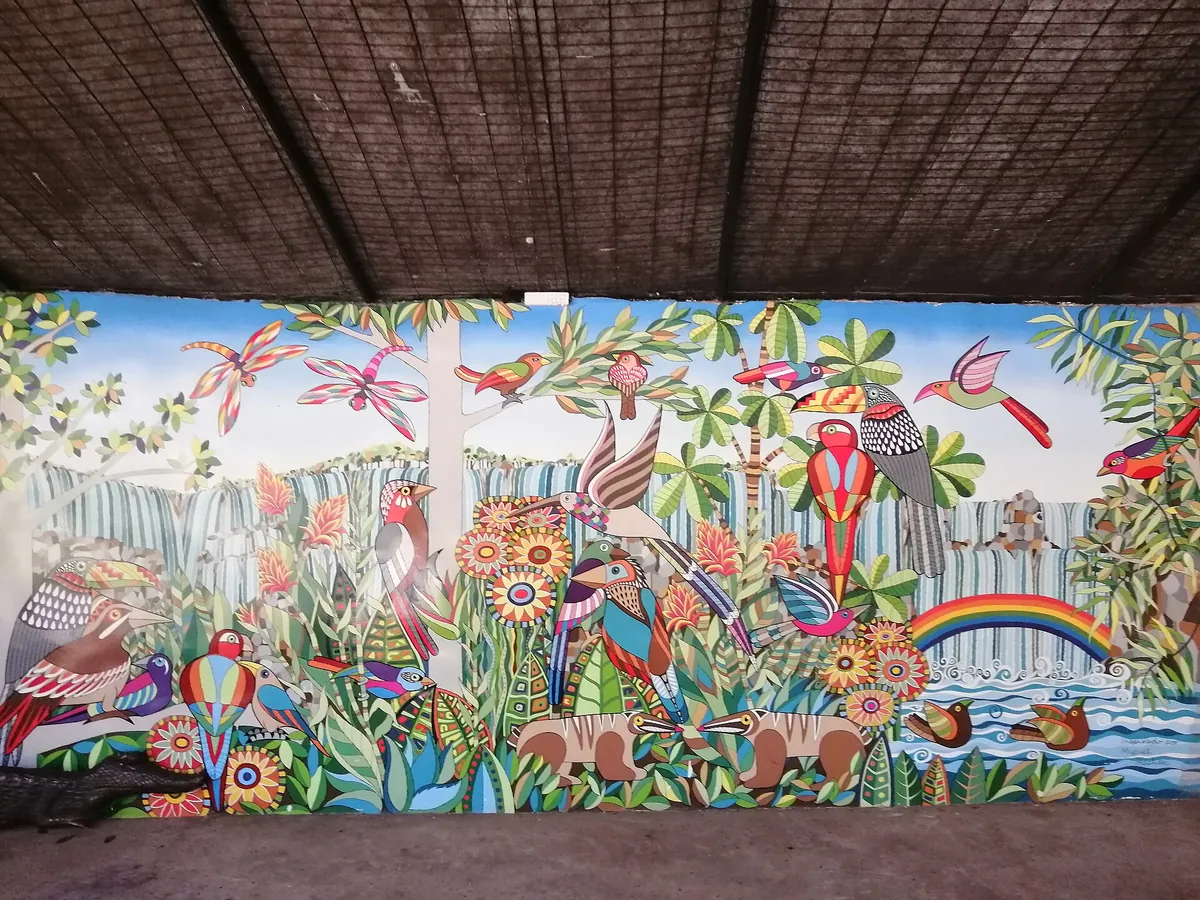
The best places to see animals near Iguazu Falls in Brazil are the falls themselves, where coatis and great dusky swifts live wild, and two animal parks a few minutes away: Parque das Aves, next door to Iguaçu National Park, and Zoo Park Foz, less than five minutes from the park entrance. Wild sightings come down to luck, so for a sure look, start at Parque das Aves, have lunch there and then head to the falls, the order the bird park itself recommends.
Which venue to choose
The three answer different wishes. The national park gives you wild animals on their own terms, Parque das Aves puts you close to birds you would struggle to spot in the forest, and Zoo Park Foz adds falconry, monkeys and farm animals you can meet.
Iguaçu National Park: wild animals, no guarantees
Private cars cannot enter the park; your ticket includes the park's own transport, so keep watching out of the window on the ride in. Animals often cross the park road, and vehicles sometimes stop to let a species cross. The traditional falls visit takes about two hours.
Watch for coatis. They are active by day and live both on the ground and in trees, and the park warns that they are used to people and may come after food. Around the water, look up for great dusky swifts: the species roosts around waterfalls and is known for flying through Iguazu Falls.
For birds, walk the Poço Preto path, nine kilometres through the Atlantic Forest on foot or by bike, which the park singles out for birdwatching. Access is from 9am to noon on foot and from 9am to 3pm by bike, so start it before you do the falls.
Parque das Aves: the sure look
Featured location Parque das Aves Foz do Iguaçu, Brazil ALPZAWAZA It lies close to the Iguaçu falls on 16 hectares of native forest and holds 1,500 animals of 140 species, taking in birds, reptiles and mammals. A private body, it works as an integrated conservation centre for Atlantic Forest species, researching captive breeding and keeping threatened animals. There are 1,300 metres of trails, with habitat mock-ups for caimans, boas, marmosets and butterflies.
A 2 km self-guided walk takes you through immersion aviaries with about 1,400 animals, more than half of them with rescue stories. The Macaw Aviary, described as one of the largest macaw aviaries in South America, holds blue-and-yellow, red-and-green and hyacinth macaws and turquoise-fronted parrots; time it for a feeding at 10:30am, 2pm or 3:30pm. In the walk-through World of Toucans aviary you see toco and green-billed toucans up close, and the park also has one of the largest bird aviaries in Brazil, with more than 300 parakeets.
Allow at least an hour; the average visit is three. The park opens every day, weekends and holidays included, from 8:30am to 4:30pm.
Zoo Park Foz: falconry, monkeys and a petting farm
You may still see it listed as Eco Park Foz; in 2026 it goes by Zoo Park Foz.
Featured location Eco Park Foz Brazil ALPZA Eco Park Foz is a zoo in Brazil. Its exhibits include Bosque de primates and Pequeña granja.It is home to more than 190 animals. Many arrived after trafficking, abuse or accidents; those that recover can be released, and the rest stay in its care. Its falconry centre flies birds of prey at 10:30am and 4pm, an experience the park calls unique in Latin America, and farm-animal interaction runs at 11am and 4:30pm. The primate enclosure, billed as the only walk-in primate enclosure in South America, holds three monkey species alongside flamingos, toco toucans, tortoises and brocket deer.
New this year are Diferentes Amados, which introduces wild animals such as owls and iguanas, and From Wolf to Dog, a space on how wolves became dogs. Give the park two to four hours; the highlights take about two.
Best time to visit
Avoid July if you can. Iguaçu National Park had its busiest month ever in July 2026, with 263,150 visitors during the school holidays. That same month Parque das Aves set a record of 125,114 visitors, and Zoo Park Foz issued 23,000 tickets, 26% more than in July 2025.
If you want the falls at their fullest, the water volume is usually greatest from December to February, which is also one of the rainiest periods.
Plan the day around opening hours. National park entry runs from 9am to 4pm on weekdays and from 8:30am to 4pm at weekends, every day of the year, and you can stay until the park closes at 5:30pm whatever entry time you booked. Parque das Aves opens daily from 8:30am to 4:30pm and Zoo Park Foz daily from 9am to 5pm.
To see the falls before regular entry opens, book the Amanhecer nas Cataratas dawn visit. It starts at 6am and walks the Falls Trail past the main viewpoints to the walkways, and from 16 September it runs on Wednesdays as well as Thursdays, Fridays and Saturdays.
Tickets and saving money
Prices below were checked in September 2026: a standard ticket bought online runs from about R$100 to R$135 at each place.
- Iguaçu National Park: R$134 for a full ticket and R$121 for a Brazil/Mercosur ticket, each including a R$3 contribution to the Fundo Iguaçu. Tickets are sold preferably online, and you are advised to book a day and time when you buy.
- Parque das Aves: R$110 per person for Brazilians and foreigners alike; children up to 8 enter free with a guardian who shows an official photo ID or the child's birth certificate. Tickets cost the same online or at the ticket office and do not sell out, but buying ahead saves time at the entrance.
- Zoo Park Foz: the full ticket is listed at R$158 but sold online for a promotional R$99.99, and a half-price ticket is R$69 when bought online in advance. Children under 6 go free with an exempt ticket from the ticket office.
At Zoo Park Foz, buying online takes more than a third off the listed price. All three standard tickets, with Zoo Park Foz bought online, come to about R$344 per person.
Getting there
City bus line 120 runs from downtown Foz do Iguaçu to the national park and stops near Parque das Aves, for a fare of R$5. Zoo Park Foz is less than five minutes from the national park entrance.
If you drive, parking costs R$60 a day at Parque das Aves and R$65 a day for a car at the national park. You cannot drive on into the park: its internal transport is included in your ticket.
When you arrive
The Parque das Aves trail is fully paved and works for visitors with reduced mobility and for strollers, with benches, accessible restrooms with changing tables and free drinking water along the way, and the park lends wheelchairs free of charge. The national park has accessible transport and main viewpoints and lends standard wheelchairs free at its Visitor Centre. Zoo Park Foz says it is especially suitable for children aged 2 to 10; it has a snack kiosk, and you are welcome to bring your own food for a picnic.
Other wildlife nearby
Across the river, Argentina's Iguazú National Park shares the falls. Its wildlife includes great dusky swifts, large toucans, coatis and a diversity of butterflies, and its rare and threatened species include the jaguar, South American tapir, ocelot, black-fronted piping guan, harpy eagle and yacare caiman.
Back in Brazil, one of the conservation projects Zoo Park Foz contributes to is Onças do Iguaçu, which works for the coexistence and conservation of the jaguar. And for one more animal stop, the Itaipu Biological Refuge tour passes a zoo with more than 15 enclosures.
Frequently asked questions
- Is Parque das Aves worth it?
Yes, if you want to be sure of seeing birds up close rather than hoping to glimpse them in the forest. For R$110, as of September 2026, you get a 2 km walk through immersion aviaries with about 1,400 animals, and the park sits next to the national park, so it fits into a falls day.
- What is Parque das Aves?
A bird park next to Iguaçu National Park, where a 2 km self-guided walk takes you through immersion aviaries holding about 1,400 animals, more than half of them with rescue stories. Its aviaries include one of the largest for macaws in South America.
- What animals can you see at Iguazu Falls?
Coatis, which the park warns may come after your food, and great dusky swifts, known for flying through the falls. The Argentine side's wildlife also includes large toucans and many butterflies, and its rare and threatened species include the jaguar, tapir and ocelot.
- Are there monkeys near Iguazu Falls?
Yes. Zoo Park Foz, less than five minutes from the national park entrance, keeps three monkey species in a walk-in primate enclosure that it bills as the only one of its kind in South America.
Discover more in Brazil
Plan your visit to Brazil
See all 24 zoos, aquariums and wildlife attractions in Brazil, with opening hours, ticket prices and accreditation.
Browse BrazilMore guides
-
 Trip Planning
Where to See Animals in Rio de Janeiro
Rio has one zoo and one aquarium, plus a free urban forest full of monkeys -- here's how to pick between them with limited time. -
 Trip Planning
Is There a Zoo in Bogotá? Where to See Animals Near the Capital
Bogotá has no city zoo. Compare the nearest animal parks on distance, animals and opening days, and pick the right day trip from the capital. -
 Comparisons
Ecoparque or Temaikèn: Which Buenos Aires Wildlife Park to Visit
One is in Palermo near the Line D metro, the other a full day out in Escobar. Compare animals, prices, buses and hours, then choose.