
Day Trips
Safari Parks in Germany: Where You Can Drive Among the Animals
In Germany you can steer your own car past lions and tigers at Safariland Stukenbrock in North Rhine-Westphalia and at Serengeti-Park in Hodenhagen, Lower Saxony, the two drive-through parks on Wikipedia's list of German safari parks. Serengeti-Park is the bigger, at 220 hectares the largest safari park in Europe, while Stukenbrock costs less at the gate. If you have no car, or only a convertible, a zoo with a boat ride through its African savanna, such as Hanover Zoo or ZOOM Erlebniswelt Gelsenkirchen, is the better day out.
Which safari park to choose
Wikipedia defines a safari park as a zoo-like attraction where you drive your own vehicle, or ride in one of the park's, to see animals roaming freely. Its list for Germany names three: ZOOM Erlebniswelt Gelsenkirchen (1949), Safariland Stukenbrock (1969) and Serengeti Park in Hodenhagen (1974). At Stukenbrock and Hodenhagen you drive; at ZOOM you explore the Africa world on foot and by boat.
Safariland Stukenbrock: the original, with rides thrown in
Stukenbrock first opened, as Safaripark Stukenbrock, on 15 July 1969, and today it keeps about 600 animals of 35 species. The drive takes you through three sections: the lion savanna, the tiger taiga and the savanna landscape. Its large, often drivable enclosures hold lions, tigers, elephants, giraffes, antelopes, wildebeest, llamas and rheas.
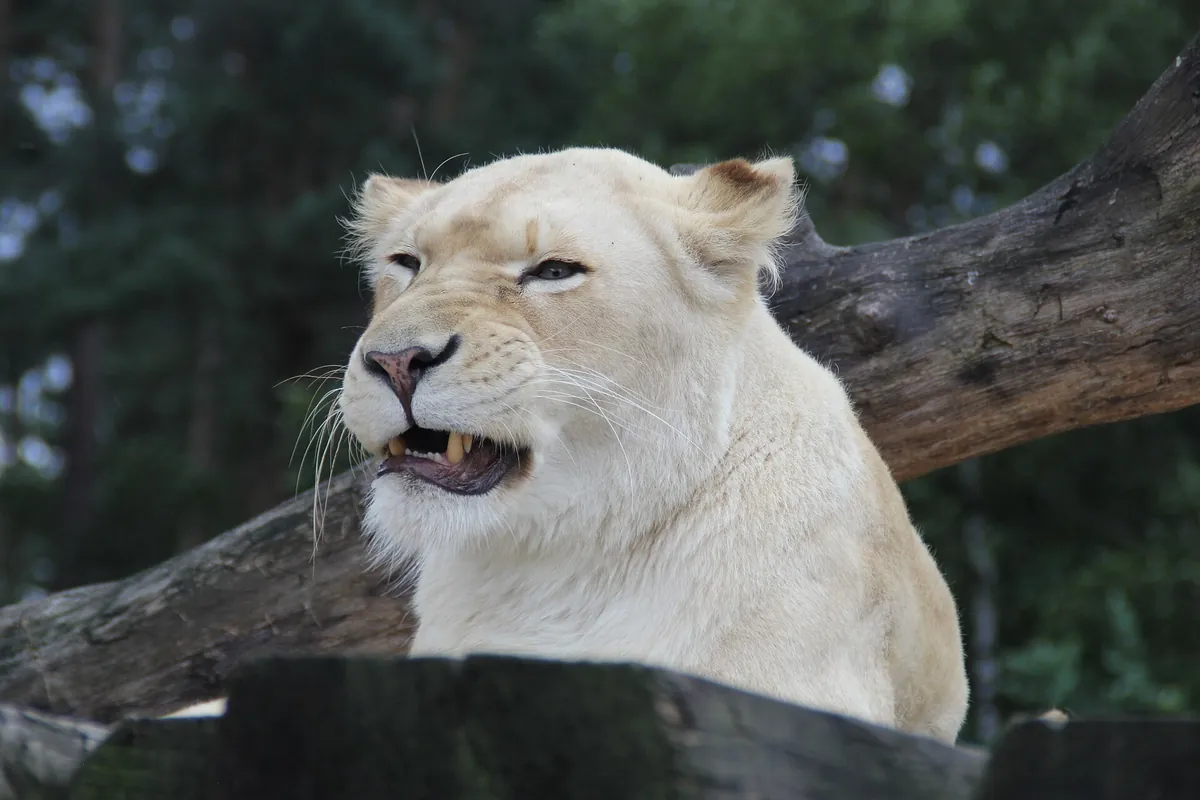
White tigers have lived here since 1987. A group lives in the drive-through area and two more in an Indian temple enclosure. Look out too for the three African elephant cows, Benji, Mausi and Baby, which you can watch from the car or the bus. They came from various circuses and are living out their retirement at the park.
You have three ways to do the safari: your own car, the park's safari bus, or a VIP van. The bus costs €4 per person, leaves every hour from a stop about 100 m from the Safari-Store, and its commentary is in German. The VIP safari costs €160 for up to four people plus €20 for each extra person, lasts about an hour and ends at the white lions' house. It can only be booked by phone, and you still need a day ticket on top.
After the drive, park and walk. The walk-through area has a large cheetah enclosure, a temple for Barbary macaques, a petting zoo and an area for white lions. Here is the biggest difference from a zoo: your ticket also covers an amusement park with 30 rides and live shows and the indoor play park Kattas Welt, and they are not sold separately. The Kongo-River water ride, 21 metres high, has the highest double drop in Germany. The park has also changed hands: Thomas Meyer took it over as a family business in June 2026.
Featured location Safariland Stukenbrock Schloß Holte-Stukenbrock, Germany Operated by Senne Großwild Safariland GmbH & Co KG, the park pairs its animal enclosures with a rides area whose attractions have included Europe's first swinging boat and a 350 m coaster, Flying Tiger, since shut down.

Serengeti-Park Hodenhagen: the biggest
Serengeti-Park is an animal and leisure park in Hodenhagen, Lower Saxony, named after the savanna in Tanzania. With 220 hectares and almost 750,000 visitors a year, it is the largest safari park in Europe. The Sepe family has run it since 1974, and it holds 2,000 exotic animals alongside more than 100 attractions, rides and shows.
The drive through its Serengeti-Safari is 10 kilometres long and included in admission, at your own risk. Its sections include areas for Siberian tigers, lions and white tigers, and the Elfenbeintal (Ivory Valley) is the only place you may get out of the car. The park warns that the car in front may stop because a rhino is standing on the road: animals always have right of way. Rhinos are part of its story, too. In 1996 it achieved the world's first release into the wild of a white rhino bred in Europe. The Dschungel-Safari holds more than 200 monkeys, partly in walk-through enclosures and on islands.
Without your own car, you can take the Serengeti-Bus-Safari with the park's rangers or book one of its VIP safaris. The park calls itself Africa in the Lüneburg Heath, and the real heath is worth a look on the way: its open land is kept clear mainly by grazing Heidschnucke sheep, and its birds include the black grouse, the nightjar and the woodlark.
No car? A zoo with a boat safari
If you arrive by train, or your car is a convertible, two zoos let you see a savanna from the water instead.
Hanover Zoo opened on 4 May 1865, the fifth zoo in Germany. Its Zambezi boat ride is included in admission: 18 boats glide past zebras, antelopes, flamingos, hippos, Somali wild asses, rhinos and wading birds. The boat section lasts about ten minutes, and you continue on foot to the lions, hippos, flamingos, pelicans and meerkats. In the Hippo-Canyon you watch the hippos underwater through panoramic glass. Two recent changes: Aldabra giant tortoises returned in August 2026 after 18 years away, and work on a Jungle Palace extension, with a large new hall for the elephants, picked up in February 2026.
ZOOM Erlebniswelt spreads over more than 30 hectares, with about 900 animals of more than 100 species in its Alaska, Africa and Asia worlds, and it opens 365 days a year. In the Africa world you cover a 2.2-kilometre route on foot and by boat. The African Queen passes hippos surfacing in the water, then a savanna with zebras, antelopes and rhinos. There is a new arrival on the lion enclosure too: Max, a nearly 12-year-old male, has moved in from ZooParc Overloon in the Netherlands.
So which? Pick Stukenbrock for a cheaper drive-through with rides included, Serengeti-Park for the biggest park and the 10-kilometre drive, and Hanover or ZOOM if you would rather walk and float than steer. And if what you really want is animals living free, a herd of about 300 feral Dülmen horses lives in the Merfelder Bruch near Dülmen, in north-western North Rhine-Westphalia.
Tickets and saving money
These prices were checked in September 2026.
- Safariland Stukenbrock: €34 for adults and €30 for children aged 3-12; children under 3, wheelchair users and blind visitors go free. Parking is €3.50 per car.
- Serengeti-Park: €49.50 for adults, €39.50 for children aged 7-12 and €34.50 for ages 3-6, plus €5.50 parking per car. An afternoon ticket, valid from 13:30, costs €39.50 for adults.
- Hanover Zoo: date-specific online day tickets from €17.60 for adults, or €30.20 for the Flexi ticket with no fixed date. At the ticket machine on weekdays, adults aged 25 and over pay €29.20 and children aged 3-16 pay €19.20.
- ZOOM Erlebniswelt: €23.50 for adults and €15.50 for children aged 4-12 until 31 October, with under-4s free; buying at the gate adds €1 per ticket. A family day ticket for two adults and one child costs €55.
The best deals are dated, so check the calendar before you pick a day. On September weekends, grandparents who bring their grandchildren to Serengeti-Park pay only the child price of €39.50 at the ticket desk. Its tickets are tied to the season but not to a particular day, so you can buy ahead without committing to a date. At Stukenbrock, anyone visiting on their birthday gets in free with ID, and in September 2026 first-year schoolchildren get free day admission with a school certificate.
ZOOM halves its day-ticket prices on its saving days, with 17 September and 12 October still to come in 2026; family day tickets are excluded. Hanover's online prices are dynamic, so the earlier you book, the bigger the saving. If you already hold an annual pass for a zoo in Lower Saxony, the zoo days on 26 and 27 September 2026 let the participating zoos, Serengeti-Park among them, accept each other's passes.
Best time to visit
At both safari parks the drive-through shuts well before the gates do. Stukenbrock is open daily from 10:00 to 18:00 in 2026, but ticket sales and the last drive-through end at 16:00, and it lists closing days on 14-17 and 21-24 September. Serengeti-Park's summer season runs daily until 1 November 2026. Its ticket desks and safari close before the official closing time because the drive takes about an hour, and the last bus tour leaves at 15:30. From 6 November 2026 to 28 February 2027 it reopens for winter with a light festival.
Plan around North Rhine-Westphalia's autumn school holidays, which run from 17 to 31 October 2026. On busy days, weekends and school holidays included, ZOOM recommends driving straight to car park P3 by entering Grimbergstraße in your satnav.
The zoo alternatives have seasons of their own. Hanover Zoo is open from 9:00 to 18:30 until 25 October 2026, with entry up to 30 minutes before closing, and its Zambezi boats run daily from 9:30 to 17:45 in the summer season only. ZOOM's African Queen sails from 10:00 to 17:40 until the end of September and from 10:30 to 17:10 from 1 to 30 October, then stops for the winter months, November to mid-March. From October, ZOOM's pelicans also move into winter quarters you cannot see.
Getting there
A drive-through needs a car, and not every car qualifies. Stukenbrock keeps convertibles and cars with folding roofs out of the safari, while Serengeti-Park bars convertibles with folding roofs and vehicles with loose attachments.
- Safariland Stukenbrock: Mittweg 16, Schloß Holte-Stukenbrock; take the A33 to exit 23, Stukenbrock-Senne. Without a car, bus line 84.1 runs from Schloß Holte-Stukenbrock via the safari park to Stukenbrock-Senne. On the drive, never get out and keep windows and doors shut in the lion and tiger areas; in an emergency, sound the horn and the rangers will help.
- Serengeti-Park: three minutes from the Westenholz exit of the A7. The €5.50 parking fee applies per car even if you take the bus tour rather than driving yourself.
- Hanover Zoo: 10-15 minutes from the main station by bus 128, 134 or 900, or by Stadtbahn line 11 to its Zoo terminus. The zoo car park has a 2 m height limit and costs €8 for three hours or more. For up to five people travelling by train, the zoo recommends the Niedersachsen-Ticket, on which children ride free.
- ZOOM Erlebniswelt: tram 301 from Gelsenkirchen main station stops at the zoo; parking costs €3.50 for up to three hours or €7 for the day.
With kids and accessibility
At Stukenbrock, children under 7 must come with an adult, and bicycles, balance bikes, scooters and skateboards stay outside. The petting zoo's West African dwarf goats and Cameroon sheep may only be fed the park's own feed mix. If you stay overnight, some of the larger resort lodges can be fitted with a ramp for wheelchair users on request. At Serengeti-Park, leave bags, backpacks, handcarts and pushchairs outside the walk-in enclosures.
If anyone in your group uses a wheelchair, start with Hanover Zoo. It lends wheelchairs free, keeps inclines on its footways to 10% or less, has accessible toilets in every theme world, and its Zambezi boats take regular wheelchairs, with staff helping you on and off, though not electric ones. Visitors with disabilities pay the regular price, but an ID marked B, Bl, aG or H brings a free ticket for a companion. For babies, there are microwaves for heating food in the Yukon Market Hall and the Hoflokal.
ZOOM is harder going. Its paths are mostly unpaved and can be uneven, with inclines in places, and loan wheelchairs are limited, so reserve one in advance.
Frequently asked questions
- What is the best safari park in Germany?
For size, Serengeti-Park in Hodenhagen: at 220 hectares it is the largest safari park in Europe, with a 10-kilometre drive. For a cheaper day with rides included, Safariland Stukenbrock charges €34 for adults, against €49.50 at Serengeti-Park, as of September 2026.
- How much do safari park tickets in Germany cost?
As of September 2026, adults pay €34 at Safariland Stukenbrock and €49.50 at Serengeti-Park, with parking extra at €3.50 and €5.50 per car. Children aged 3-12 pay €30 at Stukenbrock, and €34.50-39.50 at Serengeti-Park depending on age.
- Can you drive a convertible through a German safari park?
Not at Safariland Stukenbrock, which keeps convertibles and cars with folding roofs out of the safari, and not a soft-top at Serengeti-Park, which bars convertibles with folding roofs. Take the park bus instead: €4 per person at Stukenbrock and €7.50 at Serengeti-Park.
- How long does a drive-through safari take?
Allow about an hour at Serengeti-Park, where the route is 10 kilometres long; its bus tour also lasts an hour. At Stukenbrock the VIP van tour takes about an hour, and the last drive-through is at 16:00.
- Are there polar bears in Germany?
Yes. At Hanover Zoo, polar bears, grey seals and penguins dive past panoramic windows in its underwater world, in the same zoo as the Zambezi boat ride.
Plan your visit to Germany
See all 158 zoos, aquariums and wildlife attractions in Germany, with opening hours, ticket prices and accreditation.
Browse GermanyMore guides
-
 Trip Planning
Is Leipzig Zoo Worth Visiting?
What a day at Leipzig Zoo gets you, from Gondwanaland to the new Feuerland tunnel, what it costs, and how to fit it into a city trip. -
 Trip Planning
What Is the Biggest Zoo in the UK?
Whipsnade is the UK's biggest zoo by area; Chester has more animals. Compare five giants on size, time, tickets and access, then pick your day out. -
 Day Trips
Zoos Near Paris: The Best Animal Day Trips From the City
City zoo, drive-through safari or pandas two hours away? Compare the zoos near Paris by travel time, price and what each does best.